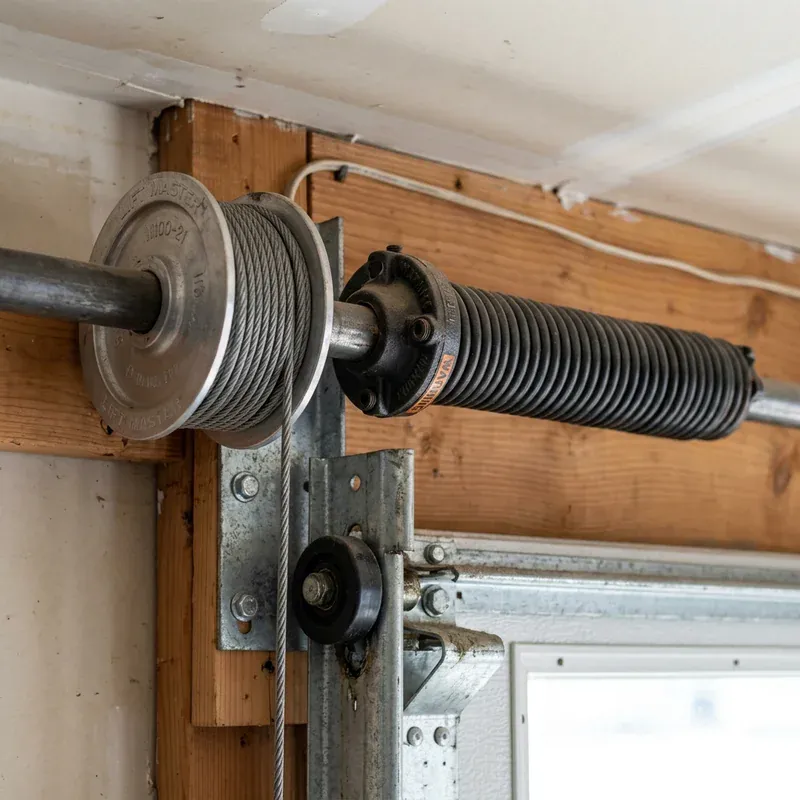
High-Tensile Torsion & Extension Spring Replacement
Overhead door springs do the heavy lifting of your door system, counterbalancing hundreds of pounds so an opener motor can lift the panels effortlessly. Standard residential springs are rated for 10,000 cycles — roughly seven to ten years of typical daily operation. Once metal fatigue sets in, the steel coil snaps with a loud gunshot-like sound.
Replacing torsion springs requires winding bars, vice grips, and precise wire gauge calibration. An incorrectly sized spring either fails to counterbalance the door, causing severe opener motor strain, or exerts too much tension, causing the door to shoot open dangerously. Technicians calculate exact door weight to install balanced, high-cycle oil-tempered springs.
Overhead garage doors carry between 150 and 350 pounds of dynamic load balanced by extreme spring tension. Attempting to force a stuck door, release tensioned cables, or operate a failing motor risks severe impact injury and catastrophic gear damage.
Mechanical Inspection Checklist
Every Garage Door Spring Repair & Replacement dispatch includes comprehensive diagnostics:
- Dual-spring replacement to balance load and prevent premature sister-spring failure
- Oil-tempered and galvanized springs rated for 10,000 to 25,000 cycles
- Torsion shaft, bearing plate, and cable drum inspection with every spring swap
- Full manual balance testing before reconnecting the opener
Schedule Garage Door Spring Repair & Replacement
Need immediate dispatch or a repair quote? Speak with our team now or submit your request below.
Frequently Asked Questions About Garage Door Spring Repair & Replacement
Expert guidance on common signs of failure, diagnosis steps, and professional repair standards.
Both springs experience identical cycle counts and thermal stress. When one spring breaks from fatigue, the twin spring is usually within days or weeks of snapping under the sudden double workload.
Never attempt this. Opener motors are designed to guide balanced doors, not lift 200+ pounds of dead weight. Running the motor with a broken spring strips the internal gear and burns out the motor board.
That sound is almost always a torsion spring snapping. As the tightly wound steel coil breaks, all of its stored kinetic energy releases in a split second across the metal torsion bar.
Standard 10,000-cycle springs last roughly 7 to 10 years at four cycles daily. Upgraded high-cycle springs rated for 20,000 to 25,000 cycles can deliver 15 or more years of trouble-free operation.
Torsion springs mount horizontally on a metal shaft above the door opening and twist to store energy. Extension springs mount along the horizontal tracks on either side and stretch outward as the door closes.
Torsion springs hold lethal amounts of mechanical tension. Professional winding bars and specialized tension gauges are mandatory to prevent severe injuries from slipping tools or uncontrolled coil release.
Technicians measure wire diameter with a micrometer, inner coil diameter, and overall coil length, then verify the door's physical weight on an analog scale to calculate the exact IPPT (Inch-Pounds Per Turn).
Cold temperatures contract steel molecules, increasing internal tension and reducing metal ductility. Most fatigue-related spring fractures happen early in the morning during the season's first freeze.
Need Immediate Assistance for Garage Door Spring Repair & Replacement?
Do not risk personal injury or further mechanical damage. Technicians are ready to secure your door safely.
877-828-0018 — Request Service