Motor Diagnostics, Drive Belts & Smart Opener Systems
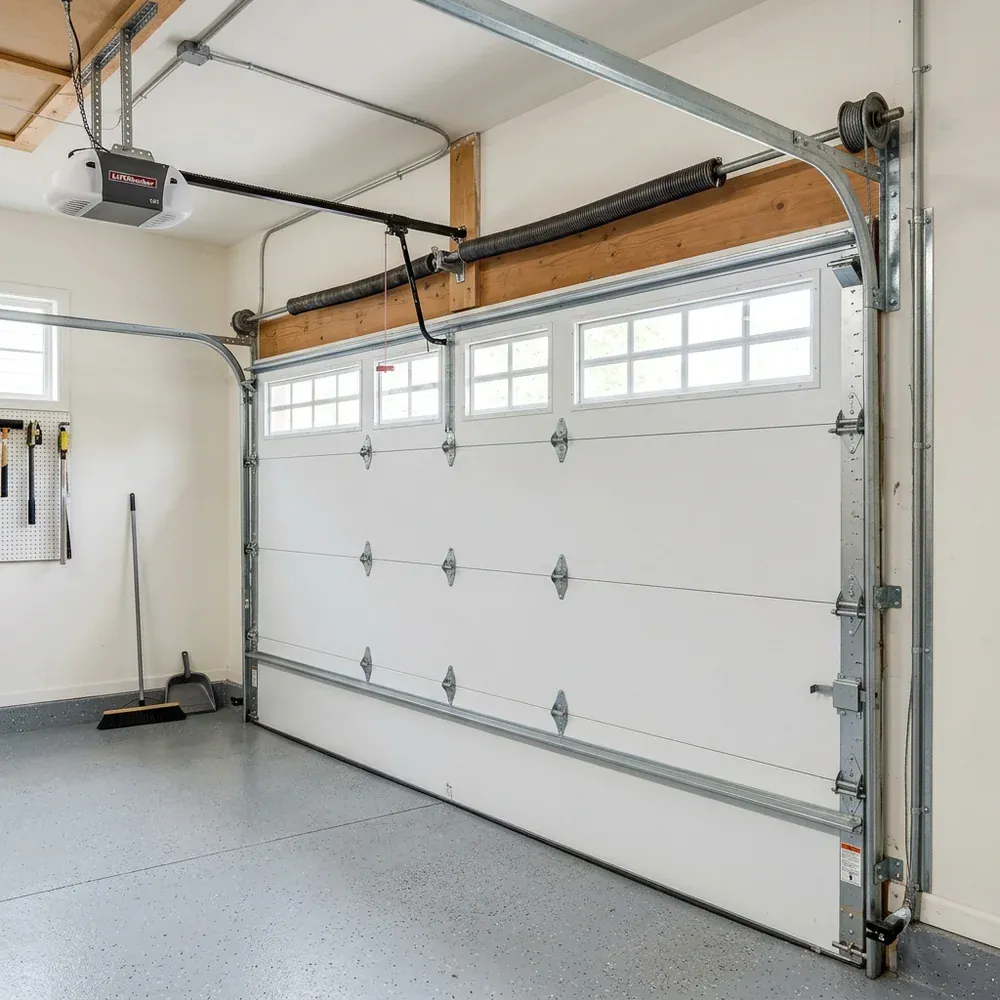
Automatic garage door openers combine motorized power units, mechanical gear assemblies, and optical safety circuits. When an opener malfunctions, symptoms range from a motor that hums without turning to a trolley that travels along the rail while the door stays motionless on the ground.
Common opener failures stem from stripped nylon drive gears, blown starting capacitors, stripped chain sprockets, or optical safety sensors that have drifted out of alignment. Technicians diagnose electronic circuitry and mechanical opener components on-site, repairing salvageable units or installing modern whisper-quiet belt-drive openers with battery backup and smartphone control.
Overhead garage doors carry between 150 and 350 pounds of dynamic load balanced by extreme spring tension. Attempting to force a stuck door, release tensioned cables, or operate a failing motor risks severe impact injury and catastrophic gear damage.
Mechanical Inspection Checklist
Every Garage Door Opener Repair & Installation dispatch includes comprehensive diagnostics:
- Diagnostic testing of drive gears, capacitors, motor logic boards, and trolleys
- Precision optical photo-eye sensor realignment and wiring checks
- Belt-drive, chain-drive, and wall-mount direct-drive opener installations
- Keypad, wireless remote, and mobile smartphone app pairing
Schedule Garage Door Opener Repair & Installation
Need immediate dispatch or a repair quote? Speak with our team now or submit your request below.
Frequently Asked Questions About Garage Door Opener Repair & Installation
Expert guidance on common signs of failure, diagnosis steps, and professional repair standards.
A humming motor with no movement usually indicates a stripped nylon drive gear, a seized carriage trolley, or a broken counterweight spring that makes the door too heavy for the motor.
The optical safety sensors near the base of the tracks are out of alignment, dirty, or blocked by sunlight interference. Blinking opener lights typically flash an error code pointing to sensor issues.
Openers older than 15 years lack modern rolling-code security and mandatory auto-reverse safety standards. If replacement gears or logic boards cost more than half of a new unit, an upgrade is recommended.
Belt-drive openers reinforced with steel-core rubber belts and direct-drive wall-mount (jackshaft) openers produce virtually zero vibration, making them ideal for garages beneath bedrooms.
Weak remote batteries, LED light bulb frequency interference inside the motor head, or a frayed receiver antenna wire hanging from the opener casing commonly cause signal degradation.
Technicians can calibrate in-car HomeLink or Car2U visor buttons, wireless exterior keypads, and universal remotes to communicate securely with your opener system.
Modern openers feature integrated 12V battery backups that provide 20 to 50 cycles during power cuts. Units without batteries can be detached manually using the red disconnect cord.
Force limit dials regulate how hard the motor pushes and pulls. If set too light, the door reverses on cold days; if set too heavy, the door poses a crushing hazard to objects in its path.
Need Immediate Assistance for Garage Door Opener Repair & Installation?
Do not risk personal injury or further mechanical damage. Technicians are ready to secure your door safely.
877-828-0018 — Request Service