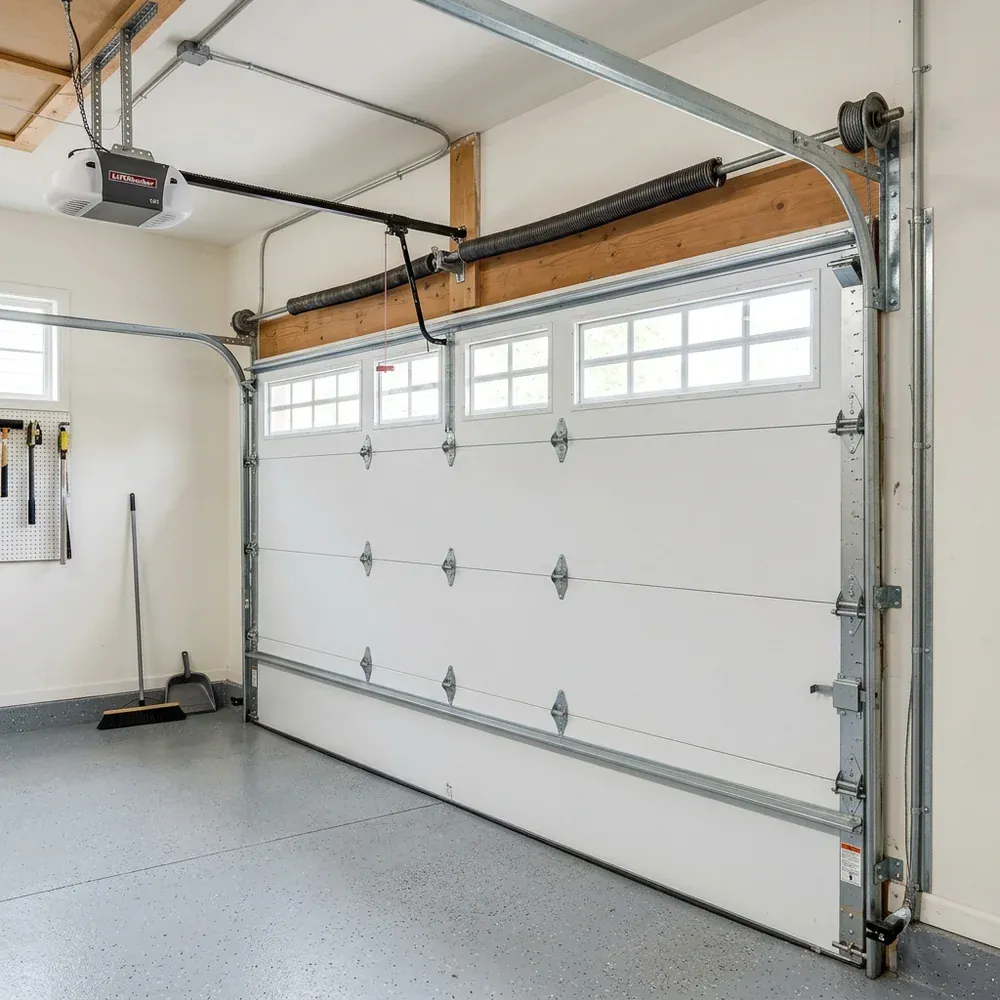
Section-by-Section Panel Swaps & Structural Realignment
Backing a vehicle into the garage door or suffering storm debris impacts does not mean the entire door assembly must be scrapped. Sectional overhead doors consist of individual tongue-and-groove or shiplap panels connected by heavy-duty steel hinges. In most collision scenarios, only the bottom one or two sections suffer structural deformation.
Leaving bent panels in service compromises the weather seal, allows water infiltration, and exerts uneven friction on track rollers that eventually derails the door. Technicians identify the door manufacturer, gauge, and insulation rating from the panel serial tag, ordering or sourcing exact matching sections to restore structural integrity at a fraction of full door replacement costs.
Overhead garage doors carry between 150 and 350 pounds of dynamic load balanced by extreme spring tension. Attempting to force a stuck door, release tensioned cables, or operate a failing motor risks severe impact injury and catastrophic gear damage.
Mechanical Inspection Checklist
Every Garage Door Panel Replacement dispatch includes comprehensive diagnostics:
- Accurate panel profiling matching manufacturer, color, and insulation rating
- Hinge, strut, and bottom weatherstrip transfer and calibration
- Structural track inspection to ensure smooth travel across replacement joints
- Affordable repair alternative to complete door frame teardowns
Schedule Garage Door Panel Replacement
Need immediate dispatch or a repair quote? Speak with our team now or submit your request below.
Frequently Asked Questions About Garage Door Panel Replacement
Expert guidance on common signs of failure, diagnosis steps, and professional repair standards.
Yes. Sectional garage doors are modular. If the door model is still in production or standard profiles match, a single damaged section can be swapped while keeping the remaining panels.
Manufacturers place a metal or paper identification label along the inside vertical edge of the panels, usually on the interior side of the bottom or middle section.
Operating a bent door strains horizontal track curves and opener trolleys. Structural bends can bind the rollers mid-travel, causing the door to jump off the tracks completely.
Minor panel sagging can often be reinforced by installing a horizontal 2-inch or 3-inch steel U-bar strut. Severe creases or cracked hinges require a section swap to ensure safety.
Factory paint matches the original factory color code, though older exterior panels may show sun fading. Many homeowners choose to paint the entire exterior surface after installation for a uniform finish.
Top panel cracks occur when an automatic opener pushes against the door without a proper operator reinforcement bracket, flexing the top sheet metal until fatigue fractures appear.
Standard non-insulated and vinyl-backed sections often take 3 to 7 business days to source, with the physical on-site installation completed in under two hours.
Homeowners insurance or auto collision policies frequently cover vehicle impact damage to garage doors, subject to deductible amounts and policy terms.
Need Immediate Assistance for Garage Door Panel Replacement?
Do not risk personal injury or further mechanical damage. Technicians are ready to secure your door safely.
877-828-0018 — Request Service